


Brookvent at the Specifi Show in Bristol
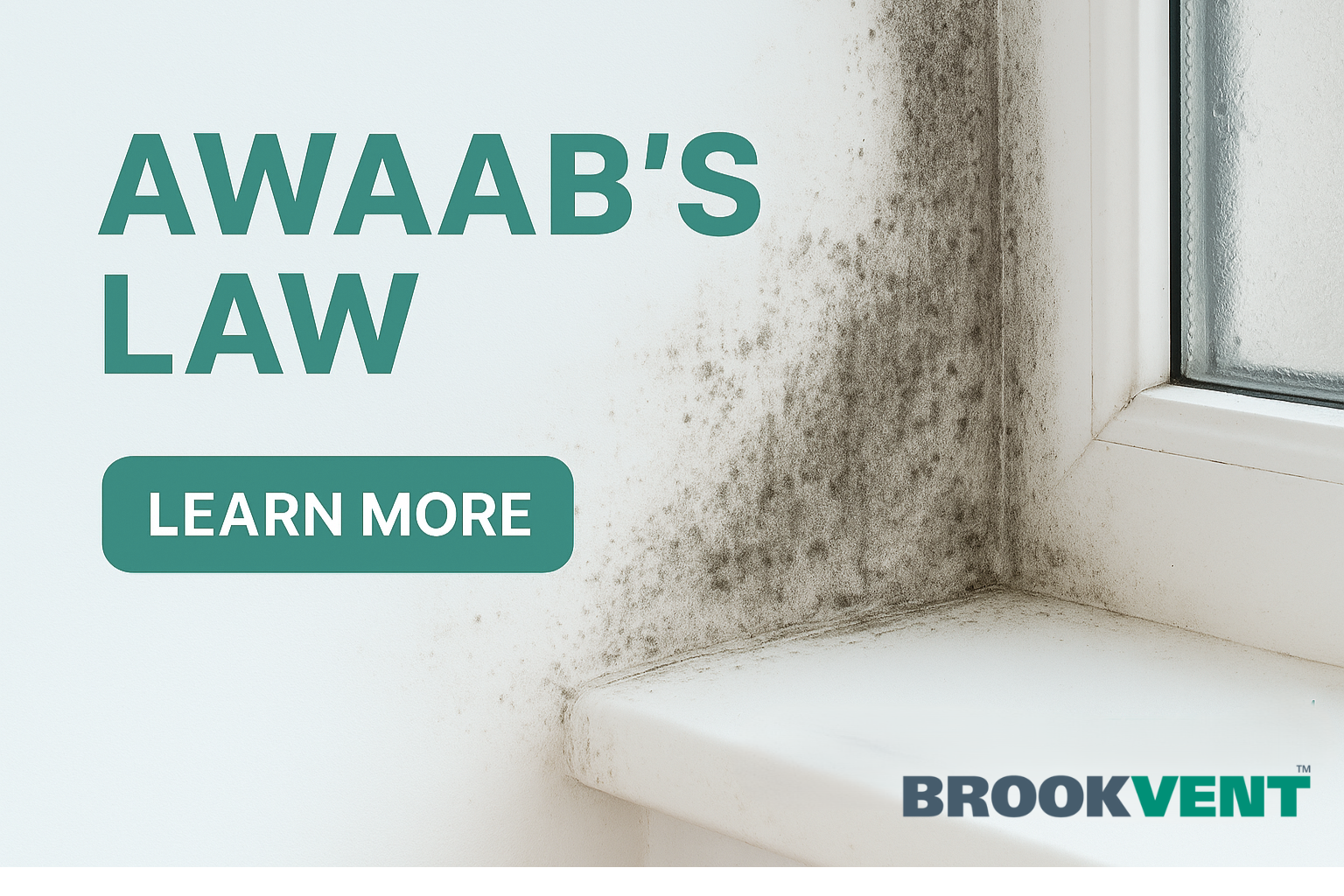
Awaab’s Law
A pivotal moment in UK housing policy with the introduction of Awaab’s Law, a new legal framework designed to protect tenants from dangerous living conditions—especially those caused by damp, mould, and other serious hazards.
Named after Awaab Ishak, a two-year-old who tragically died in 2020 due to prolonged exposure to mould in his family’s social housing, the law is a direct response to the systemic failures that allowed such conditions to persist. His story sparked national outrage and a demand for change. Now, that change is here.
🔍 What Is Awaab’s Law?
Awaab’s Law sets strict deadlines for social landlords to investigate and resolve health hazards in tenants’ homes. It applies to local authorities and housing associations across England and is automatically included in tenancy agreements—giving tenants the right to take legal action if landlords fail to comply.
⏱️ Key Deadlines for Landlords
The law distinguishes between emergency hazards and significant hazards, each with its own response timeline:
🚨 Emergency Hazards (e.g. exposed wiring, severe leaks)
- Investigate and make safe: within 24 hours
- Written summary of findings: within 3 working days
- Longer-term repairs arranged: within 5 working days
- All work started: within 12 weeks
⚠️ Significant Hazards (e.g. damp, mould, fungal growth)
- Investigation begins: within 10 working days
- Written summary of findings: within 3 working days
- Make home safe (if hazard confirmed): within 5 working days
If the home cannot be made safe in time, landlords must offer suitable alternative accommodation.
⚖️ Legal Power for Tenants
Because Awaab’s Law is now part of tenancy agreements, tenants can legally challenge landlords who fail to meet these deadlines. Landlords can only defend themselves if they’ve used “all reasonable endeavours” to comply.
📅 What’s Next?
Awaab’s Law will roll out in three phases:
- Phase 1 (2025): Damp, mould, and emergency hazards
- Phase 2 (2026): Fire risks, cold/heat, structural issues
- Phase 3 (2027+): Remaining health and safety hazards (excluding overcrowding)
From Homes to Healthy Air: Where Brookvent Comes In
At Brookvent, we understand that ventilation and air quality are intrinsic to healthy homes. Mould doesn’t just appear overnight, it thrives in damp, poorly ventilated conditions. In many cases, fixing damp or mould isn’t enough unless the underlying cause (often moisture and poor airflow) is addressed.
That’s where Brookvent’s ventilation solutions can help bridge the gap between compliance and real, lasting habitability. Our systems (e.g. window vents, MVHR systems) are designed to:
-
Reduce internal humidity
-
Help prevent condensation and damp
-
Maintain fresh air exchange without excessive heat loss
-
Support compliance with healthier-home standards
For your readers interested in deeper dives, Brookvent’s own blog covers how ventilation, indoor air quality, and building technologies tie into healthier living spaces. You might explore linking to or referencing posts like “What is Indoor Air Quality and How Does It Affect Us”
We are ventilation specialist
Contact Brookvent today to learn more about our full range of ventilation products that will help you and your home!
Contact our team on 02890616505, hello@brookvent.co.uk or Fill in our contact us form
Related posts


